History class often carries a reputation for being dry, filled with dates, names, and events that can feel distant to students. How can educators bridge this gap and make the past feel present and exciting? The answer may lie in leveraging modern technology to transform learning into an interactive experience. Gamified learning platforms like Gimkit offer a dynamic way to teach history, turning passive memorization into an active, engaging pursuit. By incorporating game-based mechanics, teachers can captivate students, improve information retention, and foster a genuine appreciation for the stories that shaped our world.
This article will explore how to effectively use Gimkit for history lessons. We will cover practical examples of games and activities, discuss the educational benefits of this approach, and provide tips for integrating the tool into your curriculum.
Contents
What is Gimkit and Why Use It for History?
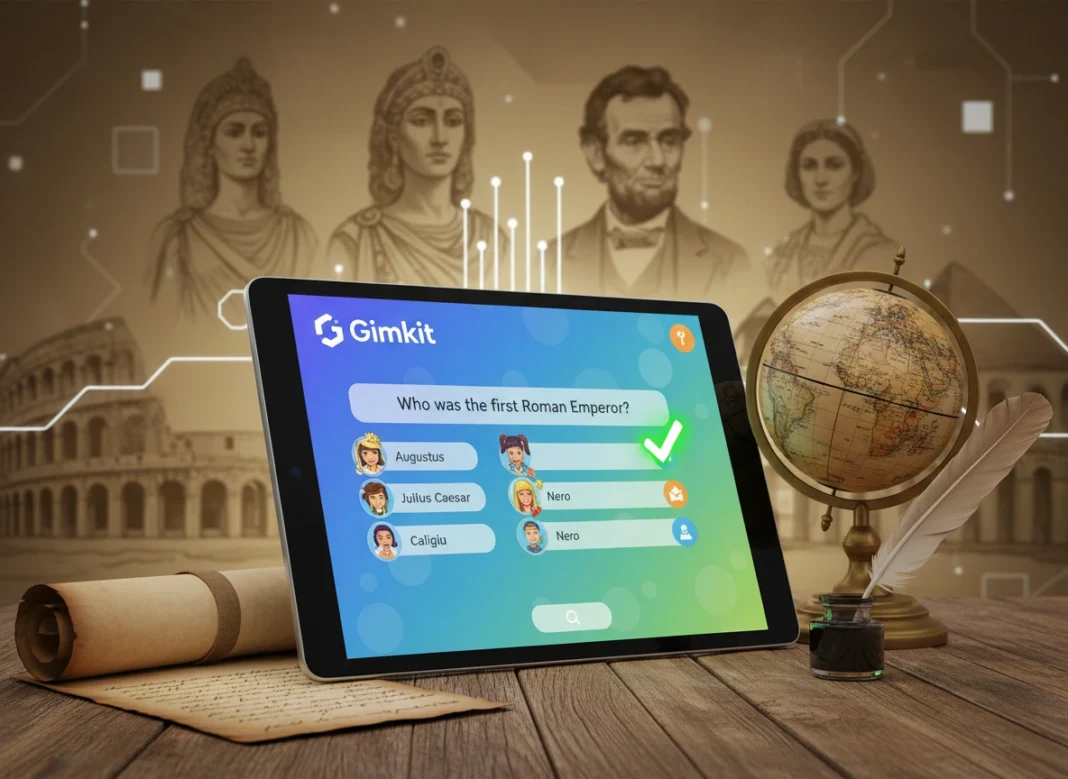
Gimkit is an interactive learning platform that allows teachers to create and host live games, called “Kits,” which students play on their own devices. While it functions as a quiz tool, its unique feature is the integration of game-show elements and an in-game currency system. Students answer questions to earn virtual money, which they can then “invest” in power-ups and upgrades to enhance their earning potential or affect other players’ scores. This structure adds layers of strategy and competition that go beyond simple right-or-wrong answers.
For history education, this model is particularly powerful. It moves students from being passive recipients of information to active participants in a game. Instead of just recalling the year the Magna Carta was signed, they are motivated to answer correctly to gain an advantage in the game. This gamified environment can help students connect with the material on a new level, making abstract historical concepts more tangible and memorable.
Transforming History Topics with Gimkit Games
The flexibility of Gimkit allows educators to tailor games to virtually any historical topic, from ancient civilizations to modern political movements. The key is to design questions that encourage critical thinking rather than just rote memorization.
Example 1: The American Revolution “Treasure Hunt”
Imagine a unit on the American Revolution. A teacher could create a Gimkit called “Road to Independence.” Questions could cover key figures, pivotal battles, and important documents.
- Sample Question: “Which document, largely written by Thomas Jefferson, declared the colonies’ separation from Great Britain?” (Answer: The Declaration of Independence)
- Game Twist: As students answer correctly, they earn “colonial currency.” They can use this currency to buy power-ups like “Freeze,” which temporarily stops another player, or “Shield,” which protects them from losing points. This strategic element keeps the game exciting and unpredictable.
Example 2: “Trust No One” for the Cold War
The Cold War was a period defined by suspicion and espionage. The Gimkit game mode “Trust No One” is a perfect fit for this topic. In this mode, students work together to identify “impostors” among them by answering questions.
- Sample Question: “What was the name of the U.S. policy aimed at preventing the spread of communism?” (Answer: Containment)
- How it Works: Students answer questions about Cold War concepts like the Iron Curtain, the Space Race, or proxy wars. After a few rounds, they vote on who they believe the impostor is. This setup mirrors the paranoia of the era, encouraging students to think critically about the information and their classmates’ actions.
Example 3: “Humans vs. Zombies” for the Black Death
To teach about the spread of the Black Death in medieval Europe, the “Humans vs. Zombies” mode offers a compelling simulation. The class is divided into two teams, and questions focus on the causes, effects, and societal impact of the plague.
- Sample Question: “Rats carrying infected fleas are believed to have spread the plague along what routes?” (Answer: Trade routes)
- Game Dynamic: As the “Humans” team answers questions correctly, they earn power-ups to defend themselves. If the “Zombies” team is faster, they can “infect” the humans, growing their team. This creates a vivid representation of how a pandemic can spread, making the historical event feel more immediate and real.
The Educational Benefits of Gamifying History
Integrating tools like Gimkit into the classroom is more than just a fun break from lectures. It offers significant pedagogical advantages that support deeper learning and student development.
Increased Student Engagement
The most immediate benefit is a dramatic increase in student engagement. The competitive, fast-paced nature of Gimkit captures students’ attention, especially those who may be disengaged during traditional lessons. The desire to win, earn in-game currency, and use strategic power-ups motivates students to focus on the questions and actively recall information. This active participation turns learning from a chore into a challenge they are eager to accept.
Improved Knowledge Retention
When students are actively engaged and emotionally invested in an activity, they are more likely to remember the information associated with it. The process of repeatedly answering questions in a game format reinforces historical facts, figures, and concepts. The context of the game creates stronger neural pathways, helping to transfer knowledge from short-term to long-term memory. A student is far more likely to remember the significance of the Battle of Yorktown if they answered a question about it to win a close game.
Fostering Collaboration and Strategic Thinking
Many Gimkit modes encourage teamwork and strategic planning. In team-based games, students must communicate and collaborate to succeed. In individual modes, they must think critically about when to spend their virtual currency on upgrades versus saving it. These decisions require them to weigh risks and rewards, developing valuable strategic thinking skills that are applicable far beyond the history classroom.
Practical Tips for Integrating Gimkit into Your Curriculum
Successfully incorporating a new tool requires thoughtful planning. Here are some practical tips for bringing Gimkit into your history lessons.
- Start Small: Don’t try to replace your entire curriculum overnight. Begin by using Gimkit for review sessions at the end of a unit or as a fun warm-up activity to start a class. This allows both you and your students to get comfortable with the platform.
- Design Thoughtful Questions: The quality of your game depends on the quality of your questions. Move beyond simple date memorization. Create questions that require students to understand cause and effect, compare and contrast historical figures, or identify the significance of an event. You can use multiple-choice questions or have students type in short answers.
- Use It for Formative Assessment: Gimkit provides instant feedback for both students and teachers. After a game, you can review a detailed report showing which questions students struggled with. This data is invaluable for formative assessment, helping you identify knowledge gaps and tailor future lessons to address areas of confusion.
- Involve Students in Kit Creation: Empower students by having them create their own Gimkits. Assign small groups a specific topic within a unit and have them write the questions. This not only deepens their own understanding but also creates a library of student-generated games that the whole class can play.
Potential Challenges and Considerations
While Gimkit is a powerful tool, it’s important to be aware of potential challenges.
- Over-Competition: The competitive nature of the games can sometimes lead to frustration for students who are falling behind. It’s important to foster a positive classroom culture where the focus is on learning and participation, not just winning. Using team modes can help mitigate this by encouraging collaboration.
- Technology Access: Gimkit requires each student to have an internet-enabled device. Ensure your school has the necessary technology and that access is equitable for all students. If not all students have a device, they can work in pairs or small groups.
- Time Management: Live games can be very engaging, and it’s easy to lose track of time. Set a clear time limit for each game to ensure it complements, rather than consumes, your lesson plan.
Conclusion: A New Chapter for History Education
Gimkit offers history educators a powerful way to break free from the traditional lecture-and-memorize model. By transforming lessons into interactive games, you can make historical events feel vibrant, relevant, and unforgettable. The platform’s ability to boost engagement, improve retention, and develop critical thinking skills makes it a valuable addition to any teacher’s toolkit. By thoughtfully integrating gamified learning, you can help students not only learn about the past but also develop a lifelong curiosity for the stories that have shaped our world.
Please visit website for more info.